

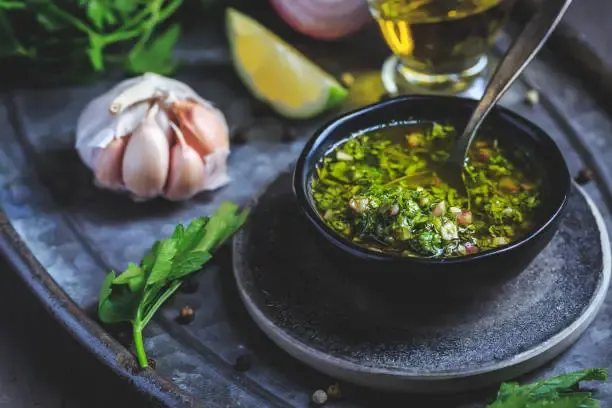
If there's one thing that defines the identity of an authentic Argentine asado, it's chimichurri. It's not just a dressing; it is the strategic ingredient that enhances the flavor of each cut of meat.
Although people in Argentina often say that there are as many chimichurri recipes as there are families, the reality is that the success of this sauce depends on the technique, the balance of acidity and adherence to resting times.
Next, we'll reveal the technical secrets of our grill masters for preparing the The Ultimate Homemade Chimichurri, along with three international variations that will transform your dishes.
Why Your Chimichurri Doesn't Taste Like the One at a Restaurant
Before measuring the ingredients, you must master the three unbreakable rules of preparation:
- Do not use a blender or food processor: Chimichurri should be chopped by hand. Mechanical blades cause the parsley to oxidize, emulsify the oil too early, and turn the sauce into a bitter paste. We’re looking for textures, not a purée.
- The Awakening of Garlic: Lightly crush the garlic clove with the flat side of the knife before mincing it finely. This breaks down the fibers and releases the essential oils without burning your palate.
- The Sacred Rest: Chimichurri needs to sit for at least 30 minutes at room temperature so that the dry ingredients can absorb moisture and the vinegar can bring out the flavors. If you let it sit for 24 hours, the result is even better.
1. Classic Argentine Chimichurri Recipe (The Traditional Way)
This is the standard, balanced, and clean recipe, designed for fatty cuts such as flank steak, skirt steak, or ribeye.
Ingredients:
- 1 cup fresh flat-leaf parsley, finely chopped by hand.
- 4 cloves of garlic, finely chopped.
- 2 tablespoons of dried oregano.
- 1 teaspoon of ground ají (you can use hot paprika if you can't find ají).
- 1/2 cup of extra-virgin olive oil.
- 3 tablespoons of red wine vinegar.
- 1 teaspoon of coarse salt.
- 1/2 teaspoon of freshly ground black pepper.
Step-by-Step Instructions:
- The Dry Base: In a glass or wooden bowl, mix together the parsley, garlic, oregano, and ground chili pepper.
- Integration: Add the coarse salt and pepper. Mix the dry ingredients with a wooden spoon to blend the flavors.
- The Golden Thread: Slowly pour the olive oil in a thin stream, stirring constantly but gently.
- The Tangy Touch: Stir in the red wine vinegar. Taste and adjust the acidity to your liking.
- Maceration: Cover the container and let it rest in a cool, dark place before serving.
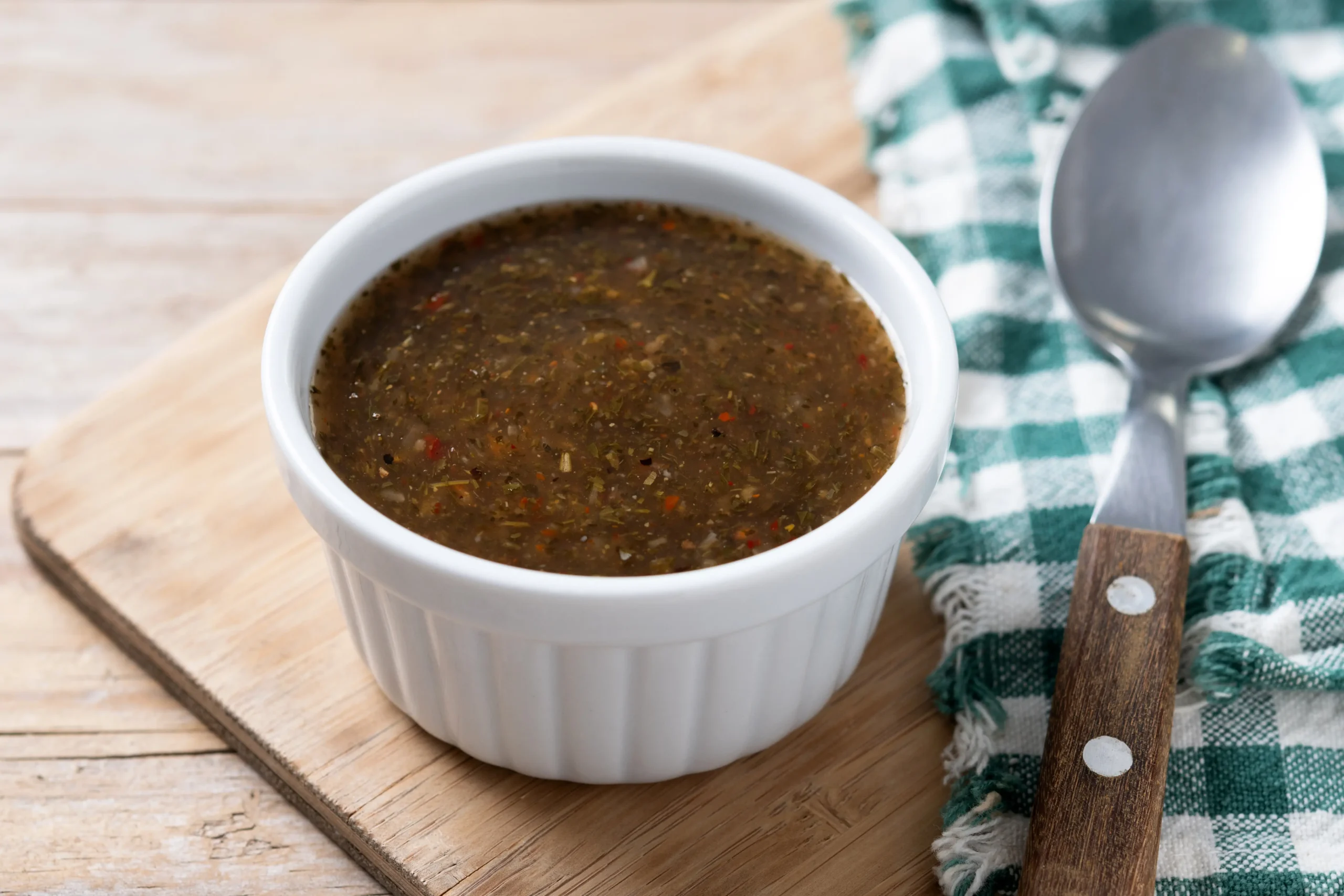
The Evolution of Salsa: 3 Original Variations to Impress
Building on the classical culinary tradition, international cuisine allows for the adaptation of flavor profiles based on geographic context and local ingredients.
1. London-Style Chimichurri (Anglo-Argentine Fusion)
A textured version, ideal for those seeking more complex flavors and a slightly thicker consistency.
- Key ingredients: Add 1 tablespoon of Dijon mustard and replace the wine vinegar with 2 tablespoons of balsamic vinegar. It also contains a 4:1 ratio of fresh parsley and cilantro.
- Why it works: Dijon mustard acts as a natural emulsifier that adds creaminess, while balsamic vinegar tempers the sharpness of the acidity with a subtle hint of sweetness.
2. Mediterranean Chimichurri (Freshness from the Coast)
An aromatic variation that replaces the spicy notes with the freshness of herbs from a Mediterranean garden.
- Key ingredients: Add 2 tablespoons of fresh basil, 1 tablespoon of fresh rosemary finely chopped and 1 teaspoon of La Vera paprika (sweet). It uses sherry vinegar and a final touch of fresh lemon juice.
- Why it works: La Vera paprika adds a smoky undertone that mimics the heat of the coals, while the lemon and rosemary immediately cleanse the palate of the meat's fat.
3. Rapid Profile Changes
- Argentine Fire (Intense Spicy): Add 1 chopped, seeded rocoto pepper, 1 teaspoon of Tabasco, and a pinch of cayenne pepper to the classic recipe.
- Mild Mediterranean (Low Impact): Use only 2 cloves of garlic, use curly parsley (which is milder), and add 1 teaspoon of honey to balance the flavor.
- Umami Enhancer (Naturally Vegan): Chimichurri is, by nature, a vegetable-based sauce. If you want to add an extra layer of «meaty» depth without using animal ingredients, try adding 1 tablespoon of nutritional yeast to the dry mixture.
Forget about those mass-produced supermarket sauces once and for all. A good cut of meat deserves respect, and you show that respect by chopping the parsley by hand and letting it rest for the right amount of time.
You already have the technique, the secrets, and the signature variations. The rest is all about execution.
Light the fire, sharpen the knife, and make your next barbecue a success. The secret is now yours. Let's go!.
 English
  Spanish