

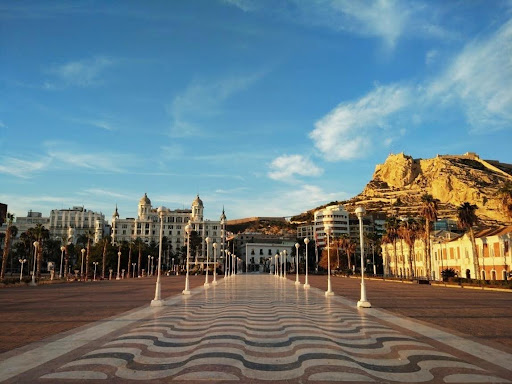
Some cities change quite a bit when summer ends, and Alicante is one of them. From Bacacay, right in the heart of the city and very close to the Central Market, we experience the side of Alicante that still offers the sea, outdoor cafes, historic neighborhoods, and streets full of life even when the August vacation season is long gone.
That's exactly why November can be a great time to discover another side of the city: less focused on spending the day at the beach and much more on walking, exploring, and discovering hidden spots and sit back and enjoy the cuisine without having to constantly check the time. From Alicante.
If you're thinking about doing a A Getaway to Alicante in November, In this guide, we’ve put together nine plans that you can easily spread out over a weekend. It’s not about rushing from one monument to the next just to get home with a full phone gallery and legs begging for mercy. The idea is much simpler: explore some of Alicante’s must-see spots, take time to stroll along the Mediterranean, discover the city center at a leisurely pace, and end the day the way many great outings around here do—around a table.
Why is it worth visiting Alicante in November?
When we think of Alicante, it’s easy to picture July, August, beach umbrellas, and whole days spent by the sea. However, reducing the city to its beach season would be to focus on only a very small part of what it has to offer. Alicante has a historic district that’s worth exploring on foot, one of its the most recognizable landmarks on Mount Benacantil, a waterfront that blends seamlessly into the city center, and a variety of cultural venues that make it possible to plan a well-rounded getaway without having to rely solely on good weather.
November also invites you to think about your trip in a different way. The beach is still part of the scenery, but it’s no longer necessarily the focus of the entire getaway. You can start your day by exploring the old town, visiting a museum, or checking out the Central Market, walk along the Esplanade and end up by the harbor without feeling like you've wasted the day because you didn't spend six hours lying on the sand. Alicante Tourism actually offers specific routes along the waterfront, the Santa Barbara Castle, the old town and the historic center—which gives you a good idea of just how well the city lends itself to exploring on foot. (Alicante Tourism)
That doesn't mean you should travel expecting the weather to always be perfect. November is November, and it's a good idea to check the forecast as your trip approaches. The advantage is that Alicante makes it fairly easy to combine outdoor activities featuring cultural heritage sites, museums, markets, and local cuisine. If the weather isn't right for a walk by the sea one morning, you can switch up your plans and save that walk for another time over the weekend.
1. Start by exploring Alicante from the Santa Bárbara Castle
If this is your first time in Alicante, start your getaway at the Santa Barbara Castle It makes perfect sense. It’s located at the summit of Mount Benacantil, at an elevation of 166 meters, and from there you get a spectacular view of the bay and much of the city. Beyond the views, the site itself offers a glimpse into Alicante’s history and helps visitors better understand the importance this fortress has held over the centuries. (Alicante Tourism)
It’s also a good way to get your bearings. From up high, you can spot the Mediterranean, the harbor, downtown, and some of the places you’ll be passing by later. In other words, you’ll have a sort of mental map before you start wandering the streets. The official tourist route dedicated to the castle connects this spot with places like the Basilica of Santa María, the MACA, and the MARQ, so it’s easy to continue your visit without turning the day into a series of trips from one end of Alicante to the other. (Alicante Tourism)
Our recommendation for a weekend getaway is to take your time. There’s no need to rush up, snap three photos, and run back down. If you’re spending two days in Alicante, you can take your time exploring the city, stroll through the area, and decide from there where your next stop will be. Before your trip, though, be sure to check the current hours and access options for the specific day of your visit.
2. Head down to Santa Cruz and wander around the old town for a while
After visiting the castle, you can continue on to one of those places where it's a good idea to put Google Maps away for a few minutes. The Santa Cruz neighborhood, located at the foot of Mount Benacantil, features narrow, steep streets, colorful houses, and hidden corners that offer a very different view of Alicante—one that is more open to the sea. Alicante Tourism describes it as one of the city’s oldest and most picturesque neighborhoods. (Alicante Tourism)
Here, the plan isn't so much about “seeing something” as it is about walking. Some places are best enjoyed when you don’t try to turn them into a to-do list, and Santa Cruz is one of them. You can stroll slowly down toward the historic district, stop at the small squares you come across along the way, and then head over to the area around the Basilica of Santa María.
This walk also helps you understand something that sometimes surprises first-time visitors to Alicante: the beach, the castle, and the old town are much more closely connected than they appear when viewed separately in a travel guide. The official Santa Bárbara Castle tour route connects several of these points along the same path. (Alicante Tourism)
That’s why, if you’re only coming for a weekend, it’s better to plan your trip by neighborhood rather than constantly hopping between distant locations. You’ll save time, walk more, and end up getting to know the streets between one monument and another better—which are often the ones that really give the trip its character.
3. Walk along the Explanada de España and continue toward the port
There are walks that practically speak for themselves, and the Esplanade of Spain It is one of them. It is part of Alicante’s most recognizable landmark and serves as a link between downtown and the waterfront. Alicante Tourism includes it in its waterfront route, along with the Postiguet, the marina promenade, Canalejas Park, and other seaside locations. (Alicante Tourism)
In November, the appeal of this walk doesn’t depend on whether it’s a beach day. You can take it in the morning, after lunch, or as the afternoon draws to a close. The idea is to walk alongside the palm trees, take in the buildings lining the promenade, and then continue toward the harbor, with no particular goal other than to enjoy an area that perfectly illustrates Alicante’s connection to the Mediterranean.
For a short getaway, this is one of those plans that’s especially rewarding because it doesn’t have to take half a day to be worth it. You can spend forty minutes there or combine it with a much longer walk along the waterfront. It all depends on the weather, how much you feel like walking, and how many times you’ve already overused the phrase “come on, just one more place and we’ll stop.”.
4. Discover El Postiguet—when the beach isn't just for swimming
The Postiguet Beach It's right in the heart of the city, at the foot of Santa Bárbara Castle and very close to the Explanada. That location makes it incredibly easy to include it in a tour of Alicante, even when the trip has absolutely nothing to do with putting on a swimsuit. (Alicante Tourism)
And that’s precisely the charm of visiting in November. During a fall getaway, you can simply stop by to stroll along the water, sit for a while gazing out at the Mediterranean, or continue walking along the Paseo de Gómiz. You don’t need to treat it as a “day at the beach” for it to be worth a stop.
It’s also a good example of how Alicante changes outside the months most commonly associated with sun-and-beach tourism. The sea is still right in front of you, the castle continues to dominate the landscape, and the location remains spectacular, but the plan might simply be to enjoy the surroundings and then head over to the Old Town or the Explanada.
Of course, what you feel like doing will depend on the weather during your stay. Before leaving your lodging, it’s worth checking the forecast and planning your day accordingly. Alicante Tourism even provides specific information on sea conditions and the beaches, which is useful if you plan to spend part of your trip on the coast. (Alicante Tourism)
5. Visit the Central Market and get a glimpse of everyday life in Alicante
There are few better ways to change the pace of a sightseeing trip than to visit a market. The Alicante Central Market It's located along the official walking tour of the historic center and is surrounded by some of the streets you'll likely pass by several times during a weekend in the city. (Alicante Tourism)
We suggest visiting in the morning, when you can take your time browsing the stalls and observing something much more everyday than a monument. Markets help you understand how a city lives, what products are part of its daily life, and what the atmosphere is like when it’s not putting on a show for visitors.
In addition, the Central Market serves as an excellent starting point for continuing your tour of the city center. From this area, you can head to Avenida de la Constitución, the Teatro Principal, the Rambla de Méndez Núñez, or the Plaza de los Luceros. The traditional downtown sightseeing route itself connects these sites along a 3.9-kilometer path. (Alicante Tourism)
In this case, it’s especially important to check the schedule before your trip, particularly if your getaway includes a Sunday or a holiday. It would be a shame to show up at the door looking like the most organized tourist only to discover that this was the one detail you hadn’t planned.
6. Set aside some time to explore a museum in Alicante
November is also a good month to mark at least one cultural outing on your calendar. Not because it’s necessarily going to rain, but because spending an entire weekend going in and out of monuments can end up making them all blend together in your memory. A museum offers a different pace and lets you discover a side of Alicante that you can’t appreciate just by walking through its streets.
There's no need to try to visit them all. The most sensible approach is to choose based on your interests. If you're interested in contemporary art, you might want to check out the MACA; if you prefer archaeology and history, the MARQ is a well-known alternative; and if you're interested in Alicante's connection to the sea and sailing, the The Ocean Race Museum It is part of the seaside tourist route. The Alicante City Museum (MUSA) is also located within Santa Bárbara Castle itself. (Alicante Tourism)
The advantage of including this type of outing over a weekend is that you can adjust it based on the weather. If it’s a beautiful day, take the opportunity to visit the castle, Santa Cruz, and the beach. If part of the day calls for staying indoors, switch up the order and save the outing for when the weather improves. A useful itinerary should help you enjoy your trip, not force you to stick to it.
7. Explore the historic downtown area without turning it into a race
After visiting the most iconic sites, it's worth taking some time to simply stroll through the historic center of Alicante. The official Alicante Tourism route includes stops at Puerta del Mar, the Explanada de España, the Rambla de Méndez Núñez, Plaza Gabriel Miró, the Teatro Principal, the Mercado Central, and Plaza de los Luceros, among other sites. (Alicante Tourism)
You don't have to follow the exact same route or turn every stop into a formal visit. You can use it as a guide and let yourself be led by the streets that catch your eye. You might want to stop for a drink, pop into a store, take a break in a plaza, or retrace your steps because you spotted a street that looked more interesting than the one marked on the map.
For anyone visiting Alicante on a two- or three-day getaway, this part of the trip is almost as important as the major must-see attractions. After a few hours of walking around downtown, you start to get a sense of the distances and stop checking your phone at every corner. That moment when you already have a rough idea of how to get back to the hotel is a small tourist victory that nobody mentions in the guidebooks, but it’s quite rewarding.
Plus, exploring this area puts you in a great spot for the dining plan we suggest at the end of the day, since Bacacay is located on Poeta Campos Vasallo Street, near the Central Market. (Bacacay : Argentine Restaurant Alicante)
8. Set aside some time in the afternoon to return to the Mediterranean
When you're planning a weekend getaway, it's easy to fall into the trap of packing every hour with activities. At 10 a.m., a monument. At noon, a museum. At 2 p.m., lunch. At 4 p.m., another sightseeing stop. At 6 p.m., the obligatory photo. In the end, you come back more tired than when you left home.
That's why one of our plans for Alicante in November is deliberately simple: not to do too much for a while. After spending a good part of the day walking, you can head back toward the waterfront, stroll through the harbor, return to the Explanada, or sit by the sea before continuing with the rest of your afternoon.
The official seaside promenade route connects the Postiguet, the Explanada, Canalejas, the marina, and The Ocean Race Museum, so you have several options for tailoring this section of the walk depending on where you finished your previous visit. (Alicante Tourism)
Also, in November, it’s a good idea to check what time it gets dark on the specific dates of your trip and plan your outdoor activities accordingly. There’s no need to obsess over capturing “the perfect sunset”; just make sure you don’t find out at the last minute that you’d booked that scenic walk for 7:00 p.m., thinking you’d still be able to enjoy it while it was still light out.
9. End the tour around a table in Bacacay
After visiting the castle, Santa Cruz, the Central Market, downtown, and racking up a few kilometers in your sneakers, it’s time for a pretty important part of any getaway: sitting down to enjoy a leisurely lunch or dinner.
That's where it comes in Bacacay It fits naturally into this itinerary. We’re located at 31 Poeta Campos Vasallo Street, very close to the Central Market, so you can stop by after exploring downtown without turning dinner into an expedition to the other side of Alicante. Our menu centers on Argentine-style grilled dishes, featuring meats, empanadas, milanesas, and other flavors associated with Argentine cuisine. (Bacacay : Argentine Restaurant Alicante)
And yes, we’re an Argentine restaurant featured in a guidebook about Alicante. But that, too, is part of what makes a city: the places you discover once you’ve finished visiting its landmarks and it’s time to share a meal. For us, a great way to end a day out needs no more mystery than that.
[Insert here a screenshot of a real Google review of Bacacay related to the food, service, or dining experience.]
Ideally, that social proof shouldn’t be a generic phrase like “everything’s great,” but rather a review that provides real context and helps visitors who aren’t yet familiar with Bacacay get a sense of what the experience is like. Authenticity works much better than us just saying how great we are. And, by the way, it comes across as much less tacky.
How to Plan These Activities for a Weekend in Alicante
If you arrive on Friday afternoon, we wouldn't try to start the getaway with a marathon-length route. You can drop off your luggage, head into the city center, and get a first glimpse of the Explanada, the harbor, and the surrounding streets. It's an easy way to get your bearings and start getting to know the area without spending your first day rushing around trying to keep up with a schedule.
The Saturday It could be the most well-rounded day. In the morning, you can head to the Central Market if the day’s schedule allows, and then continue on to Santa Bárbara Castle. From there, walking down through the Old Town and Santa Cruz areas gives the tour a sense of continuity. Afterward, head to the Postiguet, take a break for lunch, and set aside the afternoon for a museum visit or to continue strolling along the waterfront. As the day draws to a close, head back to the city center and sit down for a leisurely dinner.
The Sunday It’s a good idea to leave some time open, especially if you have to head back in the afternoon. You can explore the parts of the historic center you haven’t seen yet, visit a museum you didn’t get a chance to see on Saturday, or head back to the boardwalk if the weather’s nice. If you’re going to have lunch in Alicante before leaving, set aside enough time: the point of a getaway is to head home wanting to come back, not rushing to the station with the last bite still halfway down your throat.
Alicante Tourism even offers an official three-day itinerary that combines the city's heritage and other attractions, confirming that there's no need to try to cram absolutely everything into just a few hours. (Alicante Tourism) Even if you only have a weekend, choosing wisely usually works better than trying to visit twenty different places.
Tips for Enjoying Alicante in November
Check the forecast as your trip approaches
Planning a getaway in November weeks in advance is all well and good, but deciding exactly what time you’ll visit each outdoor spot without checking the weather first is just making life harder on yourself for no reason. When there are only a few days left, check the forecast and schedule your outdoor activities for the times when the weather is best.
This is especially useful because many of the places in this guide can be swapped around. The museum visit can be moved from Saturday afternoon to Saturday morning, while the walk along the Postiguet can be moved to Sunday. Having a flexible itinerary doesn't mean traveling without a plan; it means planning with a little common sense.
Check the hours before visiting monuments, museums, and markets
Hours may vary depending on the time of year, the day of the week, holidays, or each venue’s schedule. That’s why we’ve avoided turning this guide into a list of opening hours that might no longer be accurate. We recommend checking the official websites right before your visit, especially for Santa Bárbara Castle, museums, and the Central Market.
Break it down into sections, and you'll save a lot of time
One of the biggest mistakes you can make on a short getaway is choosing nine great activities that don’t go well together. In Alicante, you can easily avoid this. The castle, Santa Cruz, the Old Town, and Postiguet form a very logical cluster, while the Explanada, the port, and the waterfront fit together naturally. On the other hand, the Central Market, the Teatro Principal, the Rambla, and Luceros let you put together another itinerary through the traditional city center. The official tourist routes themselves organize the city in a similar way. (Alicante Tourism)
It leaves unplanned gaps
This tip seems unproductive until you try it. If every minute of your day is scheduled, you won't be able to stop at a plaza just because you like it, linger over a cup of coffee, pop into a place you've just discovered, or simply head back to the beach because it's a spectacular day.
Alicante is especially well-suited for walking and exploring different places as you go. Mark the spots you don't want to miss and leave some time between them. The weekend is usually much more enjoyable when it doesn't feel like a school field trip.
Frequently Asked Questions About Alicante in November
Is it worth traveling to Alicante in November?
It can definitely be well worth it if you’re looking to explore Alicante beyond a vacation focused exclusively on the beach. You can combine cultural heritage, the historic district, strolls along the Mediterranean, museums, the Central Market, and local cuisine into a short getaway of just a few days. As with any fall trip, it’s a good idea to check the weather forecast before finalizing your itinerary.
What can you do in Alicante in November if it rains?
Just because the weather is bad doesn't mean you have to write off your trip. You can take the opportunity to visit some of the city's museums, explore cultural venues, check out the Central Market when it's open, and set aside more time for dining. When the weather improves, you can easily make up for the walks through the historic district or along the waterfront.
How many days do you need to visit Alicante?
A two- or three-day weekend allows you to see many of the city’s most iconic sites and get a good first impression of Alicante, although obviously you won’t be able to see everything. Alicante Tourism offers an official three-day itinerary, so that timeframe can serve as a useful guide if you want to combine sightseeing, culture, and time for strolling. (Alicante Tourism)
Is it possible to explore downtown Alicante on foot?
Many of the places we recommend in this guide can be reached on foot if your mobility allows it. Alicante Tourism offers walking routes of 3.9 kilometers through the historic center, 4.5 kilometers along the waterfront, and 6 kilometers on the route leading to Santa Bárbara Castle, which helps give you an idea of the distances between different areas. (Alicante Tourism)
What clothes should I pack for Alicante in November?
The best thing to do is check the weather forecast a few days before your trip and pack clothes that you can layer. If you’re going to explore Alicante on foot, be sure to wear comfortable shoes. This might seem like the least exciting piece of advice in this entire guide, but after going up, down, and across half the city, it’ll probably be one of the tips you’re most grateful for.
Where’s the best place to end a day of sightseeing in downtown Alicante?
If you've finished exploring the Central Market, Luceros, or the downtown streets, you can head over to Bacacay for lunch or dinner without straying too far from that area. The restaurant is located at Poeta Campos Vasallo 31, near the Central Market.
Alicante in November: Take It Slow and Explore the City
Visiting Alicante in November isn’t about trying to recreate an August vacation while wearing a jacket. The charm lies precisely in changing the pace. You can start by taking in the view of the city from Santa Bárbara, stroll down the streets of Santa Cruz, gaze out at the Mediterranean from the Postiguet, walk along the Explanada, explore the Central Market, and set aside part of the weekend to experience everyday Alicante, which unfolds between one tourist spot and the next.
If you plan your trip by area and don’t try to cram twenty sightseeing stops into two days, you’ll have time for something we sometimes forget when we travel: enjoying the place we’re in. And after exploring Alicante on foot, it’s time to get to know it from a seated perspective as well.
If you want to end your getaway with a delicious meal, Reserve a table at Bacacay. We're very close to the Central Market, and we'd be delighted to help you wrap up your tour of Alicante on a high note.
 English
 Spanish